Why It Matters
Habitat destruction is an ongoing issue that is contributing to dwindling populations of our wildlife. You may look around at much of Southern California and think that they’re done developing the land but you’d be surprised to learn that there are actually more plans for building on natural habitats in the works. With growing populations, warehouse plans, and mandates for cites to build additional housing, one may ask oneself, when is it finally enough? The answer to this question is unclear; there are many valid reasons for development but there needs to be better planning and balance. Our goal is to create a comprehensive resource for people to learn about what land use changes are occurring locally in Southern California. With more people learning and thinking more about these issues, we may be able to come up with creative solutions to protect our beautiful open spaces while still thriving economically.
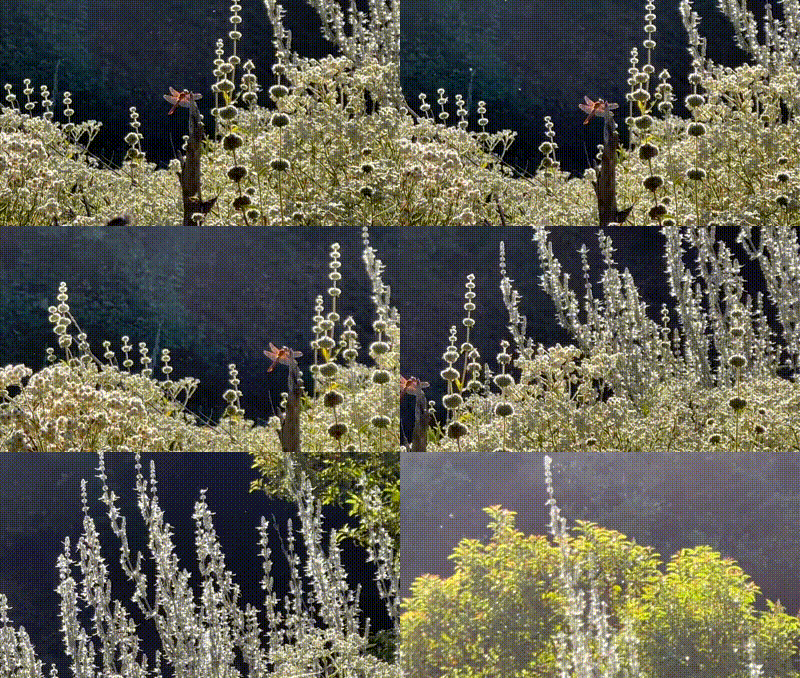
Where did the bugs go?
With roughly 75%-90% of animal life on Earth being insects, it can be easy to take them for granted, but scientists report that about 40% of insect populations (citation) are declining every year. This matters because insects are pollinators, decomposers, the foundations of many food webs, and the subjects of medical research. It’s easy to feel as though there is an endless population of “bugs” when you find ants in your kitchen or you walk into a cloud of gnats.
Another important factor to consider is whether the insects that you’re encountering are native or not. European honeybees impact native North American bee populations. Pollen is not an unlimited resource, and honeybees provide direct competition to native bees.
 Wild the West